Monday, March 29, 2010

Historical Monsters

With Halloween just around the corner, enjoy this short list of traditional monsters. If you are unsure of a halloween costume this year… here is your guide!

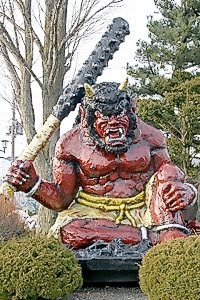
10. Oni - Japanese

Depictions of oni vary widely but they are usually portrayed as hideous, gigantic creatures with sharp claws, wild hair, and two long horns growing from their heads. They are humanoid for the most part, but occasionally, they are shown with unnatural features such as odd number of eyes or extra fingers and toes. Their skin may be any number of colors, but red and blue are particularly common. Their fierce appearance is only enhanced by the tiger loincloths they tend to wear and the iron club they favor. There is also a very obvious similarity here to devils in Judeo-Christian tradition.


9. Ogre - French


An ogre is a large, mean and hideous humanoid monster. Ogres are often depicted in fairy tales and folklore as feeding on human beings, and have appeared in many classic works of literature. Ogres are often portrayed with a large head, abundant hair and beard, a huge belly, and a strong body.

8. Vampire - Slavic

Vampires are mythological or folkloric beings that are renowned for subsisting on human blood or life-force, but in some cases may prey on animals. Although vampires have different characteristics depending on which lore one reads, in most cases, they are described as reanimated corpses who feed by draining and consuming the blood of living beings. The term was popularized in the early 18th century and arose from the folklore of southeastern Europe, particularly the Balkans and Greece. Folkloric vampires were depicted as undead beings who visited loved ones and caused mischief or deaths in the neighborhoods they inhabited while living. They wore shrouds, did not bear fangs and were often described as bloated and of ruddy or darkened countenance.


7. Mummy - Egyptian

A mummy is a corpse whose skin and dried flesh have been preserved by either intentional or accidental exposure to chemicals, extreme cold, very low humidity, or lack of air. There are popular tales (largely tall) of curses which are associated with the violation of the tombs of mummified corpses or of the mummies themselves. These tales of curses eventually lead to the modern fictional view of walking mummies.


6. Werewolf - Germanic

Werewolves are mythological or folkloric people with the ability to shapeshift into a wolf or wolf like creature, either purposely by magic, or after being placed under a curse. The medieval chronicler Gervase of Tilbury associated the transformation with the appearance of the full moon; however, there is evidence that the association existed among the Ancient Greeks, appearing in the writings of Petronius. Some modern speculation has suggested that the belief in werewolves (and vampires) may stem from real medical cases of people suffering from porphyria.


5. Goblin - Anglo-Saxon

A goblin is an evil, crabby, or mischievous creature of folklore, often described as a grotesquely disfigured or gnome-like phantom. Goblins may range in height from that of a dwarf to that of a human. They are attributed with various (sometimes conflicting) abilities, temperaments and appearances depending on the story and country of origin. In some cases, goblins have been classified as a constant annoying little creature somewhat related to the celtic brownie.


4. Ghoul - Middle Eastern

A ghoul is a monster from ancient Arabian folklore that dwells in the burial grounds and other uninhabited places. In ancient Arabic folklore, ghouls belonged to a diabolic class of jinn (spirits – from whence the genie comes) and were said to be the offspring of Iblis, the Muslim prince of darkness (Satan). They were capable of constantly changing form, but their presence was always recognizable by their unalterable sign: ass’s hooves. It would lure unwary travelers into the desert wastes to slay and devour them. The creature also preyed on young children, robbed graves and ate the dead. Yum yum!


3. Banshee - Celtic

According to legend, a banshee wails around a house if someone in the house is about to die. When several banshees appeared at once, it indicated the death of someone great or holy. The tales sometimes recount that the woman, though called a fairy, was a ghost, often of a specific murdered woman, or woman who died in childbirth. Banshees are frequently described as dressed in white or grey, and often having long, fair hair which they brush with a silver comb. Other stories portray banshees as dressed in green, red or black with a grey cloak.


2. Gorgon - Greek

In Greek mythology, the Gorgon was a vicious female monster with sharp fangs and hair of living, venomous snakes. Gorgons are sometimes depicted as having wings of gold, brazen claws, and the tusks of boars. According to the myths, seeing the face of a Gorgon turned the viewer to stone. Homer speaks of only one Gorgon, whose head is represented in the Iliad as fixed in the center of the aegis of Zeus. Hesiod increases the number of Gorgons to three: Stheno (the mighty), Euryale (the far-springer), and Medusa (the queen), and makes them the daughters of the sea-god Phorcys and of Keto. Their home is on the farthest side of the western ocean; according to later authorities, in Libya. Of the three Gorgons, only Medusa is mortal.


1. Zombie - Latin American

A zombie is a reanimated human body devoid of consciousness. In contemporary versions these are generally undead corpses. Stories of zombies originated in the Afro-Caribbean spiritual belief system of Voodoo. Other more macabre versions of the zombies have become a staple of modern horror fiction, where they are brought back from the dead by supernatural or scientific means, and eat the flesh or brains of the living. They have very limited intelligence, and may not be under anyone’s direct control.

Sunday, March 28, 2010

Weapons of The Future

We went from swords to machine guns and nuclear bombs, but what are the next weapons on the horizon? We round up ten of the most promising technologies.

1. Autonomous weapons

These are robotic vehicles, under development, that search and destroy enemy troops and equipment on the ground or in the air, without risk to friendly troops – theoretically.

How they work:  Onboard computers interpret sensor data to identify and target hostile forces with built-in weapons. Robots may query human controllers at remote sites for the go-ahead to fire, and friendly forces may carry transponders that identify them as “friends”.

Limitations: Difficulty of quickly and reliably discriminating between hostile forces and neutral or friendly parties or objects, such as civilians, cows, trees, and tractors. Systems that check with human controllers are vulnerable to communication failures. Malfunctioning robots could fire wildly at anything.


2. High-energy lasers

These are powerful energy beams that travel through air or space in straight lines. They travel at the speed of light and can strike over distances of thousands of kilometres.

How they work: Large mirrors focus powerful laser beams onto a small spot on the target. The heat produced burns through the surface of the target, disrupting flight, disabling warheads, or igniting fuels or explosives.

Limitations: It needs much more energy to do damage than bullets, which destroy targets with their momentum. Powerful lasers need fuel or electrical power and are also very bulky (the US Airborne Laser fills a Boeing 747). Travelling through air and turbulence can disperse the energy of the beam.

3. Space-based weapons

Space is the ultimate high ground, so weapons in orbit would have the ability to see and zap anything on the ground, in the air, or nearby in space.

How they work: The main mission of space-based weapons would be to defend against ballistic missiles fired at targets on Earth. Fleets of interceptors or battle stations would be stationed in orbit, poised to fire at any attacking missiles. The leading approach now is solid projectiles – such as tungsten rods- that would impact missiles. But laser battle stations are also under consideration.

Limitations: The technology is immature. Reaction times must be very fast. Interceptors must hit warheads to destroy them, which is difficult. Lasers also need chemical fuel or electrical power which is not readily available in space.

4. Hypersonic aircraft

Launched from a standard runway, a hypersonic aircraft could fly faster than Mach 5 to strike anywhere in the world within two hours. It would also have enough thrust to deliver a satellite to low-Earth orbit.

How they work: To get off the ground from a runway, a hypersonic plane would either hitch a ride on a conventional plane, or have its own conventional jet engine. That engine would carry the hypersonic craft to an altitude where air density and resistance are less. Here it would reach supersonic speeds and then shift to its scramjet engine. The scramjet scoops up air and mixes it with fuel so it burns as the mixture flows through the engine at supersonic speeds. This means scramjets can achieve some of the speed of a rocket without having to carry heavy oxidiser (to mix with fuel), as rockets do.

Limitations: The technology is immature, with many engineering issues unresolved. Scramjets engines can not start until the plane flies faster than the speed of sound. Plus, hypersonic flight has so far only been demonstrated for small unpiloted craft carried to high speed by other vehicles – and other planned experimental craft are too small to carry a pilot.

5. Active Denial System

Millimetre-wave or microwave beams supposedly make people flee without injuring them. They might typically be powered by a generator fitted to a Humvee, in crowd control situations.

How it works: A 2-metre antenna and mobile generator produce and aim a beam of 95-gigahertz (3-millimetre) radiation. The top 0.3 mm of skin absorbs millimetre waves, causing intense pain within five seconds, so people flee quickly, if they can.

Limitations: Serious injury is possible if people cannot escape from the beam; skin burns within minutes. The beam also superheats metal objects like coins, earrings, or spectacle frames, which can then burn skin.
 6. Nuclear missiles

Nuclear missiles are able to deliver unmatched destructive power anywhere in the world, making them the ultimate level of military power.

How they work: One or more nuclear warheads are mounted on a ballistic missile, and launched vertically. The rocket burns out in the upper atmosphere, then coasts to its programmed destination where the bomb descends and explodes.

Limitations: These weapons are so frighteningly destructive that they have never been used in war (the Hiroshima and Nagasaki bombs – which had much less destructive power – were dropped from aircraft). Plus, the launch site and trajectory are easy to identify, inviting retaliation in kind from the target nation.

7. Stun guns (Tasers)

Tasers disable people with bursts of high-voltage electricity, allowing police to subdue them without lasting injury.

How it works: A special gun fires darts on wires. These deliver a pulse of electricity that temporarily disrupts control of voluntary muscles. Police target body or legs to avoid vulnerable areas such as head and neck. Without muscle control, people fall to the ground.

Limitations: Tasered people may be injured when they fall to ground. Darts can injure the throat, eyes, or genitals. Pulses can cause muscle spasms or seizures, and deaths have been reported. One pulse does not stop all people, and there have been allegations of misuse of stunguns, and claims of their use in torture.

8. E-bombs

High-power microwave pulses can knock out computers, electronics, and electrical power, crippling military and civilian systems.

How they work: A rapid increase in electromagnetic field strength during a pulse, induces surges of electric current in conductors. This burns out electrical equipment – semiconductor chips are particularly vulnerable. Special bombs generate the most intense pulses covering large areas, but unmanned aircraft carrying smaller generators can pinpoint targets.

Limitations: The effects can depend on local conditions, and are hard to predict. Sensitive enemy military equipment can be shielded, and microwaves also disable friendly electronics within range.

9. Layered missile defence

Layered missile defence offers the best chance to shoot down attacking ballistic missiles.

How it works: Multiple anti-missile systems are deployed to target ballistic missiles during different stages of the attacking missile’s flight: (1) The boost phase, while the rockets firing engines makes it easy to spot; (2) Mid-course, while the warhead coasts in space, and; (3) The terminal phase, as it approaches the target. Each phase, or layer, of defence increases the chance of successful destruction of the missile.

Limitations: Depends on efficiency of each layer. The system is very expensive to build, test, deploy, and maintain. The initial boost phase is easiest to target, but requires extremely fast reaction times.

10. Information warfare

This technique interferes with the flow of information vital to enemy operations, while defending friendly channels of communication.

How it works: Information warfare specifically targets communication networks and computers. Expert computer hackers, called crackers, might break into or overload military computers and networks, or spread computer viruses. Jammers might also block radio and television transmissions. Misinformation is circulated deliberately.

Limitations: The US relies more on computers and communications than most of their potential adversaries – making the technique a potential threat to them, and of limted use against low-tech opponents. Both side are also vulnerable to mis-information.

Saturday, March 27, 2010

Top 10 Iconic Buildings

There are many different types of buildings all throughout the world, and occasionally a building is built that captivates a city or even a nation. Over time these buildings become the defining pinnacle of the greatness of the city they improve the skyline of. This is a list of buildings that the world wouldn’t be the same without.

10. Hagia Sophia


 Built on the site of a 4th century church, of which nothing remains, the Hagia Sophia has been a focal point in Istanbul (formerly Constantinople) ever since. The great church is now a museum but it wasn’t always so: for centuries it served as a pillar of the Greek Orthodox Church and then as an Islamic Mosque. The second church was destroyed by a fire during the Nika Riots in 532, although remnants of it can still be seen today. The Hagia Sophia that can be seen today was built between 532 and 537 and is one of the greatest surviving examples of Byzantine architecture. The biggest draw to the ancient church is the impressive 102 foot diameter dome which reaches 182 feet into the sky. Other stunning characteristics of the Hagia Sophia are the countless mosaics, the Loge of the Empress, the Marble Door, the Sultan’s Lodge, Mahmut I’s Library and the Marble Jars.

Who built it?
The first church was built on the spot where a pagan temple had stood, by Emperor Constantine himself in 360. In 405 the second church was built by Constantine’s son, Theodosius II. The third and final Hagia Sophia was built by Justinian in 532. In 1453 Sultan Mehmet II conquered Constantinople and turned it into a mosque, and subsequent sultans have made various additions since then.

 
9. The Louvre


One of the most easily recognizable museums in the world, the Louvre’s Palace and the recently added glass pyramid are as beautiful to those who visit as the priceless works of art that it houses. But it wasn’t always a museum, it was originally built in the 12th century as a museum but in the 14th century it was converted into a royal residence. In 1750 Louis XV turned it back into a royal museum to house parts of the royal collection. During the French Revolution it underwent another transformation, this time from royal to public museum. Throughout the years it has been added to by Napoleon I and restored by Louis XVIII and Charles X. Today the Louvre holds 380,000 pieces; 35,000 of which are on display, including such important works as The Mona Lisa and The Venus de Milo.

Who built it?
Philip II built the Louvre Palace as a fortress somewhere between 1190 and 1202, although most of the original structure has been destroyed. The Salle Basse (Lower Hall) is all that remains of the Medieval Louvre.

 
8. The Burj Al Arab


In a city famous for its architecture, the Burj Al Arab defines the Dubai skyline. The newest building on a long list of architecture built on a grand scale, the Burj Al Arab was built in 1994 and is one of the most luxurious hotels in the world. Perched on a man-made island in the Persian Gulf, it was built to mimic the sail of a dhow. The hotel features a 590-foot tall atrium, a large seawater aquarium, two restaurants (one of which was voted in the top 10 restaurants in the world by Conde Nast) and 202 luxuriously appointed suites.

Who built it?
The Burj Al Arab was designed by Tom Wright and built by Atkins for Jumeirah Hotels and Resorts. It is currently the second largest hotel in the world.

 
7. Sydney Opera House

Rising out of the Sydney Harbour, the Sydney Opera House is not only the center of the arts scene in Australia but also stands out as a must see to anyone visiting the area. In the late 1940’s Eugene Goossens, the Director of the NSW State Conservatorium of Music lobbied for a new venue for large productions. In 1955 a design competition was held by NSW Premier Joseph Cahill, and by 1958 construction had begun. The winning design features several concrete shells and houses performance spaces like the concert hall, the opera theater, the drama theater, the studio, the Utzon room, the forecourt as well as a recording studio, five restaurants, four souvenir shops and a guided tour operation.

Who built it?
The winning designer was Jørn Utzon, an architect from Denmark. When Cahill insisted on radical changes to the design, Utzon resigned mid-construction and the project was finished without him. In the 90s, the Sydney Opera House Trust reconciled with Utzon, naming him a design consultant for future work but he died in November of 2008.

 
6. Empire State Building


Once the tallest building in the world, no film or television show set in New York is complete without including a shot of the grand Art Deco skyscraper. Originally the site of the Waldorf-Astoria, construction of the Empire State Building began on St Patrick’s Day 1930. 410 days later construction was finished and it won the title of world’s tallest building, surpassing both 40 Wall Street and the Chrysler Building, which were being built around the same time. The opening of the building coincided with the Great Depression so it sat almost empty for the next 20 years. This wasn’t the only challenge the building has had to face: there was a 1945 plane crash, shootings in 1997, and more than 30 suicides. Through it all the Empire State Building has endured as a timeless monument of New York City.

Who built it?
The Empire State Building was designed by William F. Lamb, based on the designs for the Reynolds Building in Winston-Salem North Carolina and the Carew Tower in Cincinnati Ohio. Because of this, the staff of the Empire State Building sends a Father’s Day card to the staff of the Reynolds Building every year.

 
5. Taj Mahal


The crowning jewel of India, the Taj Mahal is a testament to one man’s love for his wife. It looks like a palace, but it was actually built as a tomb for the Emperor’s favorite wife. Construction began one year after her death in 1632 and the mausoleum was completed in 1648 with the surrounding buildings and gardens taking another five years to complete. The construction took 20,000 workers and craftsmen that were recruited from all across northern India. Soon after the Taj Mahal was completed, the Emperor was deposed by his son Aurungzeb and put under house arrest. When the Emperor died in 1658, he was buried beside his wife inside the Taj Mahal. During world War II the Indian government erected scaffolding around the Taj to mislead German and Japanese bomber pilots. Today the Taj Mahal is under a different threat: acid rain and pollution from the Mathura Oil Refinery has begun to turn its white marble yellow.

Who built it?
The Taj Mahal was built by Mughal Emperor Shah Jahan when his third wife Mumtaz Mahal died while giving birth to their fourteenth child, Gauhara Begum. He exchanged a large palace in the center of Agra with Maharajah Jai Singh for the three acres of land where the Taj now sits.

 
4. Eiffel Tower


Towering high above Paris, the Eiffel Tower was built between 1887 and 1889 and acted as the entrance arch for the Exposition Universelle, which marked the centennial of the French Revolution. The tower was only supposed to stand for 20 years but it was a valuable communication tool and remained as an unmistakable element of the Paris skyline (especially as buildings in the city cannot surpass seven stories). During the German occupation of Paris during World War II, the lift cables were cut forcing German soldiers to climb the stairs to the top to hoist the swastika. Within hours of the Liberation of Paris, the lifts were back in working order.

Who built it?
The Eiffel tower was designed by engineer Gustave Eiffel who had originally submitted the design to Barcelona for the Universal Exposition in 1888 but they refused. When it was built, he engraved the names of 72 French scientists, engineers and other notable Frenchmen.

 
3. Big Ben


One of the world’s most famous clocks, Big Ben is actually the name of one of the bells but over the years it has come to be used for both the clock and the tower as well. It was completed during the restoration of the Palace of Westminster in 1858. The tower stands 316 feet tall, each clock face is 23 feet square with 4 foot numbers and the great bell is seven and a half feet tall and weighs 13 tons. Nobody knows exactly whom Big Ben is named after but common theories include Sir Benjamin Hall (who oversaw the installation of the bell) or English Heavyweight Boxing Champion Benjamin Count.

Who built it?
Charles Barry designed Westminster Palace, however, Augustus Pugin created the clock tower. Pugin fell into madness and died in 1852 and Big Ben was the last building he would ever design. The clock itself was designed by Beckett Denison.

 
2. The Colosseum


The largest Roman amphitheater ever built, the Colosseum is one of the greatest architectural feats ever achieved by the Ancient Romans. Construction began between 70 and 72 AD and was finished in 80 AD. It was capable of seating 50,000 people and was usually used for gladiatorial games, but could also be used for public spectacles, mock sea battles, animal hunts, executions, reenactments of battles, and dramas based on Classical Mythology. During the medieval era its entertainment purposes ended and it has since been used as housing, workshops, a fortress, a quarry, quarters for a religious order, and a Christian shrine. Today the Colosseum is one of the most popular tourist attractions in Rome and attracts thousands of visitors every year.

Who Built it?
The Colosseum was imagined by Emperor Vespasian who used the vast treasure seized during the Great Jewish Revolt in 70 AD to fund its construction. It was built up to the third story when Vespasian died in 79 AD, but his son Titus finished it and inaugurated it in 80 AD.

 
1. The Giza Pyramids


The oldest buildings on this list, the pyramids on the Giza plateau have intrigued mankind for centuries. Not only have they stood the test of time, but the accuracy with which they were built is impressive even by today’s standards. They were built as tombs for three separate pharaohs during the Third and Fourth Dynasty. It is also the only surviving wonder of the ancient world and was the tallest building in the world until 1300 when it was surpassed by the Lincoln Cathedral. Despite their long history, or perhaps because of it, mysteries have swirled around the pyramids since they were found by the Ancient Greeks thousands of years ago. How were they built? How many people worked on the project? How long did the construction take? What was the Egyptians’ understanding of astronomy, mathematics, and geography? And even crazy questions like: did aliens help in their construction? While these questions go unanswered, all we are left to do is marvel at a culture who were master builders even before the invention of the wheel.

Who built it?
The oldest and largest of the three pyramids was built by Khufu between 2551 and 2531 BC. The second was built by Khufu’s grandson Khafre between 2558 and 2532 BC. And the third pyramid belongs to Khafre’s son Menkaure and despite not knowing the exact date of the construction many believe that it was finished somewhere around 2490 BC, several years after his death.

Friday, March 26, 2010

The Emma Maersk - The World Largest Container Ship

The Emma Maersk is a true marine engineering marvel. The world largest container ship, longest ship currently in service and is propelled by the largest diesel engine ever manufactured. She is bigger than any aircraft carrier and manages to carry 15000 containers with only a crew of 13! She was designed for High Sea travels only and unable to negotiate the Suez or Panama canals. Her Command Bridge is located at 10-floors building height. She has a top speed of 55.8 km/h and will take her about 4 days to reach Asia from US. Below are the photos of the biggest man-made vehicle on the sea.


How To Make a Woman Orgasm... and Scream for More... Every Time!

Part One
Introduction

Sex is a wonderful thing – I haven’t met a person yet who would dispute this. Everybody loves sex, whether they like talking about it openly or not. One of the reasons you’re reading this is because you enjoy sex and you would like to enjoy it more and have your partner enjoy it more. For all you males reading this, wouldn’t you like to be known around town as the greatest fuck of all time? Or husbands and men in steady relationship – wouldn’t you like your woman to be amazed at your new found sexual knowledge and have her beg you for more sex? Sex can be the greatest pleasure a person can ever experience – or a major disappointment.

Surveys have shown that 75% of women fake orgasm every time, 15% faked it most of the time and about 9.5% said they occasionally faked it. Which leaves about 0.5% who said they never faked it. I know most of you men out there will find this hard to believe, but it’s true. I’m a woman, I know.

Women, by faking orgasms, are missing out on one of the most pleasurable experiences imagineable – but so are their partners. You will realize the difference once you have read this Playgal exclusive article. Both the male and females sexual pleasure increases to unbelievable new heights once you know how to bring a woman to an orgasm every time. Your woman will want you as never before – she will never want or need another man. And girls, if you want to have better sex, then teach your man what I am about to tell you.

Most men I have met were anxious to learn how to satisfy women during sex. Each man I interviewed I asked ‘What do you think makes a woman orgasm most during intercourse?’ Most responses were along the lines of:

‘Just putting my penis inside her gets her excited’ – It may get your partner excited but it is not enough – no where near enough.

‘She just loves me ramming her hard’ – This is so far from the truth it is ridiculous!

‘Fucking her fast’ – Wrong!

It is generally easy for men to become sexually aroused because his sexual organs are on the outside of the body and are easily stimulated. Men that are unfit mentally or physically can sometimes take longer to arouse, as do men that are bored with their partners. Do you know the main reason men get bored with their partners sexually? Could it be that the woman herself is bored because she is not getting sexual pleasure and therefore doesn’t seem interested in sex as much. Sex would get boring if the pleasure is all one sided, don’t you think guys? Imagine having sex every few days and never reaching an orgasm. Doesn’t sound like much fun does it?

Some men can get a woman worked into a sexual frenzy during foreplay, but then when it comes to intercourse .. the momentum doesn’t continue and in most cases, both the man and woman don’t know what is wrong. Then the woman finally pretends to have an orgasm because she wants the whole event to be over to end the boredom and/or pain.

If a man doesn’t know how to handle intercourse properly the woman will become bored and unsatisfied in the relationship, and look for other options. Most women will tell their men everything is great – just to keep them feeling like a man. The men usually are unsuspecting that there is a problem.

But guys, it’s not your fault – you’re a man; how could you possibly know what it feels like? Only a woman really knows how to satisfy a woman. Only a woman knows the physical sensations of a woman’s body. Most women don’t like talking about it with their partners because it may make them feel less manly.

Most literature is written about rough, ramming and hard sex, so why would anyone think sex should be different – most women think this is the way to have sex too. But I’m going to help you and your partner enjoy sex to its maximum over the next few editions of Playgal.

Tease your Partner First

Women like affection. They like to have their bodies gently caressed. Imagine yourself lying totally naked and 100% relaxed with hands slowly and gently touching your body. Try running your fingertips gently, so gentle you are barely touching your body along the inside of your own arm down to your hand. It tickles a bit but it feels nice, even if it feels like you need to scratch it a little.

When making love with your partner you need to give their body a desire. Gently run your fingertips all over her body barely touching the skin. Do this for 3-4 minutes without touching the breasts or clitoris then slowly work your way up to her breasts but DONT touch her nipples. Circle her breasts with the palms of your hands and fingertips. You can occasionally kiss gently around her breasts but DON’T touch her nipples yet – touch below and above them but not on them.

This will start to drive her crazy – you have created a desire for you to touch her nipples. You are not giving her something she wants. After a few minutes of teasing her very very softly touch her nipples. Then continue to circle the nipples gently with your fingers then gently lick once or twice next to each nipple but not on it.

You are in total control – she is being driven insane by now. You have created an excitement and desire within her sexual being. Now when you feel she is ready – she will let you know it is time to move on to the next step .. The beginning of Intercourse, in PART 2, next month.

Note to Part 1:

It is important not to weaken and begin to grope and paw at her breasts and body and do not touch her clitoris in this teasing phase – it will only turn her off. The purpose is to create a want. Don’t weaken – stay in control, this is only the warm-up for great love making.
Part Two
Ready for Action!

Now, you’re both ready to go .. you’re hard and ready, and she’s giving you that look that says she wants it. You just want to plunge straight in – and she’s cheering you on.

DON’T DO IT!

You haven’t gone to all this effort to blow it all now, pardon the pun. Now – you’ve got to really start torturing her..

Touch your penis to the lips of her clitoris .. gently. Softly rub your penis over her clit, letting her know it’s there, ready to enter .. if you want it to. You are now completely in charge, and in total control of the situation. You’re going to tease her until she screams for you to put it in!

Now, she’s asking you to put it in .. but you don’t. Keep teasing. She asks more urgently .. you still don’t. You are in control, and she’s loving it – not knowing when you’re going to enter! Keep teasing, gently rubbing, even if she does scream for you to put it in.

Only when she begins building towards orgasm to you move it further in .. just half an inch or so, very slowly, in and out. After a little while (staying in control!) move it slowly in a full inch .. gradually, keep increasing the amount you put it in, until it’s almost the whole length.

Remember, if you enter the entire length – ram it in – you will make contact with her clit, and this we don’t want; the object is to tease her, make her want you to thrust all the way. The longer you tease her, and yourself, the more intense your orgasms will be.

The Point of Surrender

Now, she’s quivering with desire. Speed up a little – not to ramming speed though – and it’ll push her over the edge. She may scream, she may call at your name (hopefully!) or she may just whimper softly – but you’ll know you’ve given her an orgasm. But keep going! Keep moving in and out, faster now; she’ll orgasm again – more quickly now, with no need for teasing. You can sped up even more if you wish (and can) – but don’t resort to ‘ramming’ her hard.

She may have several more orgasms .. or only one more. Two to five is the norm, and this may be the first one she’s had in a long time! If you’ve been able to keep going past the first one, that’s great .. but even if you cum now, it will be one of the deepest and most incredible orgasms you yourself have ever had.

Refine your technique; try to make yourself hold off longer and longer. It will enrich the sexual experience for both you and your partner.

Note to Part 2:
If you’re both adventurous – and really willing to torture each other, wait until the point of orgasm and stop – dead. Withdraw, and lie down beside her.. then resume again later that or the next day. The anticipation will peak, until the next time you’ll both be ready with hardly any teasing!

Part Three
The Fantasy!


Most of us, when it comes to sex, have a good imagination. We might fantasise about the woman who works in the office next door, someone who eats lunch at the same place we do, or even imagine ourselves playing out different roles that we usually perform.

So – why not harness this natural power of fantasization for sex? If you’re more excited and aroused, your partner will know it and go further herself. And, as long as she doesn’t know what you’re thinking, you can imagine anything.

There are those, both men and women, who like to imagine themselves dominating their partner, or being submissive. This is perfectly harmless as long as it goes no further than the mind – or, if it does go further, with a partner who is attracted to the idea and wants to play out the other role.

And don’t let appearances fool you .. a sedate appearing person may have some very kinky thoughts bubbling undetr the surface; in fact, if a person is more self-repressed, it’s more likely they’ll be making up for it in their minds.

.. vs. Reality

You, and your partner, both probably have many secret little fantasies that you’ve always wanted to try. Although dressing up as King Tutankahmen and having your lover wait on you hand and foot may not be something you can confide in with someone you’ve just met, you can imagine yourself in that position .. and, when you reach a stage with someone where you feel you can trust each other, let her know about this litle fantasy .. and encourage her to tell you her own.

If you do become open to each other’s fantasies, it’s important that you don’t let them take over .. or you may find yourself resorting to kinkier and kinkier role-playing, until one day, you stop yourself and say ‘Whoah! This is getting scary .. I’m getting out!’

It’s important to realise that although fantasies – and role playing – are a great adjunct to ‘normal’ sexual encounters, they can’t replace them .. and, the more you indulge in fantasies to spice up your sex life, the more you will come to rely on them.

Strike a balance – use the anticipation of an upcoming role-playing ’session’ to fuel your desire; and maybe even run the fantasy through your mind until you can both no longer resist. In this way, you can get the most ‘mileage’ out of your imaginations.

Part Four
Healthy Body – Great Sex!

One of the biggest factors affecting the enjoyment of sex is the health of the body. Smoking cigarettes constricts the capillaries and blood vessels in the body, which restricts blood flow to the genitals and thus decreases sexual enjoyment; alcohol and other caffeine sources destroy vital vitamin B elemnts within the body, making us more lethargic.

This lethargy and lack of physical vitality not only communicates itself to our partner during sex, but also comes across when we’re on the look-out for a partner; it’s ironic that the two most consumed items in a bar or night-club environment – alcohol and cigarettes – are the two greatest killers of good sex! Vitamin B, which is burnt up by the metabolising of alcohol, also makes us more relaxed – so while the alcohol is loosening us up on the one hand, it’s destroying our Vitamin B levels. so when the alcohol has been metabolised from our bodies, we are VERY low on Vitamin B – and thus the hangover.

Our bodies function best when they contain optimum levels of amino acids, nutrients and other chemicals required for the chemical lab we call a body. Unfortunately, modern lifestyles generally do not allow for the proper intake of such chemicals; and so, the moajority of the population is functioning improperly.

So, YOU can stand out from the crowd by simply being healthier; you’ll project an aura of energy and vitality that will make you feel great – and if you feel great, other people feel great about you.

Getting Healthier

More and more vitamins and other nutrients, and how they power our body, are being discovered every year. But the basics are:

Vitamin A: essential for good skin; gets rid of those pimples and other skin impurities. It improves you hair condition, and helps your vision, both night and day.

Vitamin B: actually a broad spectrum of Vitamins, including B1, B2, B6, B12, folic acid, niacin, inositol and pantothenic acid, among others. They are what’s called synergistic, meaning that if you take too much of one type, it can make you deficient in the others; so you should take a B complex supplement every day (because B groups are water soluble, they must be replenished every day)

Vitamin C: Or ascorbic acid, assists the immune system. It should be taken with a lot of liquid. If you keep your doses high in this (say, 10,000 mgs a day) you’re likely to reduce your risk of catching colds and flus.

Vitamin D: Also gotten from exposure to the sun, it helps the body to absorb and retain calcium. Vitamin D in itself needs fat or oils to be absorbed, so take it after a meal that includes some.

Vitamin E: Assists in the transport and efficient use of oxygen; more oxygen gets to your cells, particularly your brain. It’s also called the ’sex vitamin’ because it assists in the production of sex hormones. These are the basic vitamins; however, one indespensible way to a healthy body has to be at least a minimum amount of exercise. Even if you work out lightly for half an hour every day or two, your body will function more efficiently, the blood circulate better, and your whole body function better with less stress.P And of course, let’s not forget the best form of exercise – sex!


by Jeanette Harper

P.S. – If this does not works for you .. use club or some stick or mybe a brick and hit her few times as hard as you can… you’l Get the screaming effect .. that is for sure :) LOL

Source: Here
Thursday, March 25, 2010

Luigi Colani - Future Trucks Today


Luigi Colani has designed many amazing things. Here you can see some of the trucks he has come up with and how interesting they look. These trucks are actually in use today and were actually originally designed in the 1980’s. Changes have been made to them through the years to what you see today.